The State of the EU in 2017: A Critical Reading
This article first appeared in City AM in September 2017, just before European Commission President Jean-Claude Juncker delivered his annual State of the Union speech in Strasbourg. Diane James MEP set out a critical assessment of the EU. What follows summarises her argument and does not endorse it; some of the figures date from 2017.
Migration
She says the migrant crisis was in its third year, with hundreds of thousands still arriving and new routes appearing. The EU’s approach of paying large sums to Turkish and North African governments was, in her view, failing and even encouraging dangerous crossings. She also criticises Brussels for pushing member states, especially in Eastern Europe, to accept settlement against their governments’ wishes, and notes legal action against Poland over constitutional reforms and a warning to Hungary over refugee resettlement. This, she says, shows that the EU rather than national governments is supreme.
Powers and defence
She argues that the EU had moved away from using treaties to gain powers and was taking on more in energy and financial services without consent. It had also openly begun work on EU armed forces.
Economic record
On the economy, she points to weak growth despite a 2.1 trillion euro stimulus programme. She quotes youth unemployment of about 50 per cent in Greece, 40 per cent in Spain and 37 per cent in Italy, and says Italian and Spanish banks needed rescuing again in 2017. She calls the European Central Bank’s quantitative easing questionable, claiming it hurt savers and pensioners while raising debt, and notes that the EU still enlarged its 2018 budget by eight per cent.
Democracy and transparency
- Plans to take away national and regional parliaments’ veto over future trade agreements, which she says would let deals like TTIP pass without scrutiny.
- Closed-door trilogue talks between institutions, attended by an estimated 30,000 lobbyists. She quotes the EU ombudsman saying it is difficult to learn when trilogues happen, what is discussed and by whom, and notes criticism from Transparency International.
Russia and energy
She notes that the EU maintained sanctions against Russia over Crimea while gas imports were exempt, and that it was moving ahead with the Nord Stream 2 pipeline, whose new chief executive was the former German Chancellor Gerhard Schroeder.
Why she wrote it
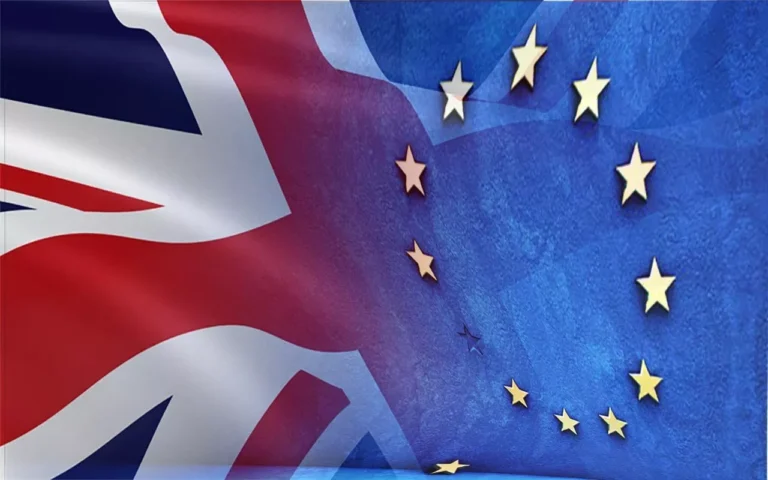
The article is framed as a counterpoint to what she expected the Commission president to say. Her opening is that he would paint a rosy picture of a land of milk and honey, and she sets out to correct this with the facts she considers most important. The structure is a checklist of failures, followed by a single summary word. Her aim was to persuade UK readers that leaving was the right decision, and she cast the EU’s behaviour on Brexit as a continuation of the same centralising instinct on display across its other policies.
Public opinion and Brexit
She cites a survey in which 66 per cent of Europeans were dissatisfied with the EU’s direction. On Brexit, she accuses the EU of trying to hold the UK in all but name by insisting on continued European legal jurisdiction, compliance with current and future EU laws, and an exit bill she put at 100 billion euros, a figure she called legally disputable.
Her verdict
Her one-word summary of the EU’s condition was “dismal”, and she doubted the Commission president would use the word himself.
She also states that all of this is in the public domain, so the unhappiness reflected in polling should surprise nobody. That framing is typical of the genre: a political argument built from a selection of facts, with the interpretation supplied by the author.
Readers should check the figures above against official sources, as this is an advocacy piece.